github.com/gabriel-vasile/mimetype @v1.4.13 sqlite
README
mimetype
A package for detecting MIME types and extensions based on magic numbers
Goroutine safe, extensible, no C bindings


Features
- fast and precise MIME type and file extension detection
- long list of supported MIME types
- possibility to extend with other file formats
- common file formats are prioritized
- text vs. binary files differentiation
- no external dependencies
- safe for concurrent usage
Install
go get github.com/gabriel-vasile/mimetype
Usage
mtype := mimetype.Detect([]byte)
// OR
mtype, err := mimetype.DetectReader(io.Reader)
// OR
mtype, err := mimetype.DetectFile("/path/to/file")
fmt.Println(mtype.String(), mtype.Extension())
See the runnable Go Playground examples.
Caution: only use libraries like mimetype as a last resort. Content type detection
using magic numbers is slow, inaccurate, and non-standard. Most of the times
protocols have methods for specifying such metadata; e.g., Content-Type header
in HTTP and SMTP.
FAQ
Q: My file is in the list of supported MIME types but it is not correctly detected. What should I do?
A: Some file formats (often Microsoft Office documents) keep their signatures towards the end of the file. Try increasing the number of bytes used for detection with:
mimetype.SetLimit(1024*1024) // Set limit to 1MB.
// or
mimetype.SetLimit(0) // No limit, whole file content used.
mimetype.DetectFile("file.doc")
If increasing the limit does not help, please open an issue.
Tests
In addition to unit tests, mimetype_tests compares the library with libmagic for around 50 000 sample files. Check the latest comparison results here.
Benchmarks
Benchmarks are performed when a PR is open. The results can be seen on the workflows page. Performance improvements are welcome but correctness is prioritized.
Structure
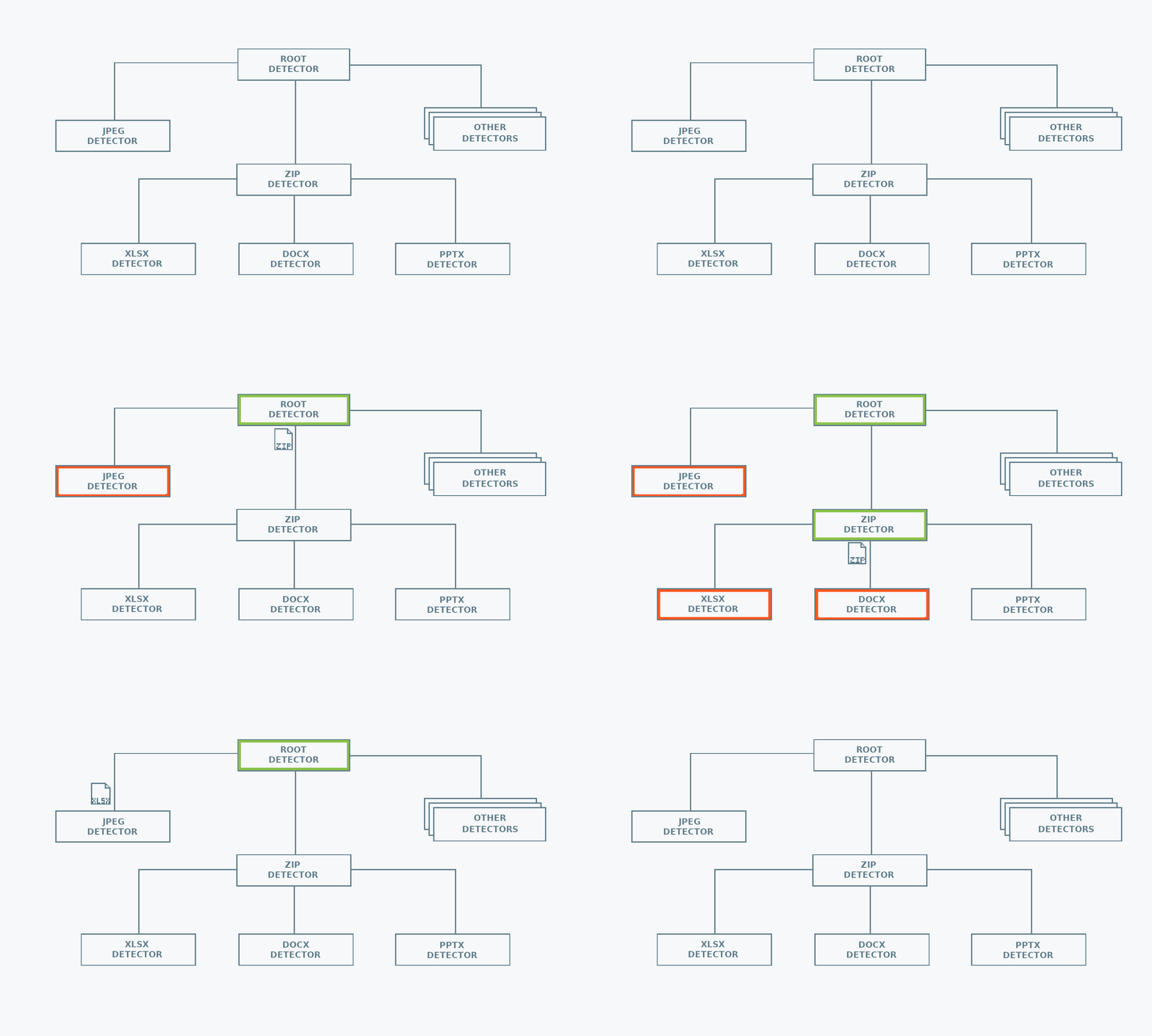
mimetype uses a hierarchical structure to keep the MIME type detection logic. This reduces the number of calls needed for detecting the file type. The reason behind this choice is that there are file formats used as containers for other file formats. For example, Microsoft Office files are just zip archives, containing specific metadata files. Once a file has been identified as a zip, there is no need to check if it is a text file, but it is worth checking if it is an Microsoft Office file.
To prevent loading entire files into memory, when detecting from a reader or from a file mimetype limits itself to reading only the header of the input.
Contributing
Contributions are never expected but very much welcome. mimetype_tests shows which file formats are most often misidentified and can help prioritise. When submitting a PR for detection of a new file format, please make sure to add a record to the list of testcases in mimetype_test.go. For complex files a record can be added in the testdata directory.
Extension points exported contracts — how you extend this code
Detector (FuncType)Core symbols most depended-on inside this repo
newMIMEShape
Languages
Modules by API surface
Used by 93 indexed graphs manifest dependencies, hub-wide
For agents
$ claude mcp add mimetype \
  -- python -m otcore.mcp_server <graph>